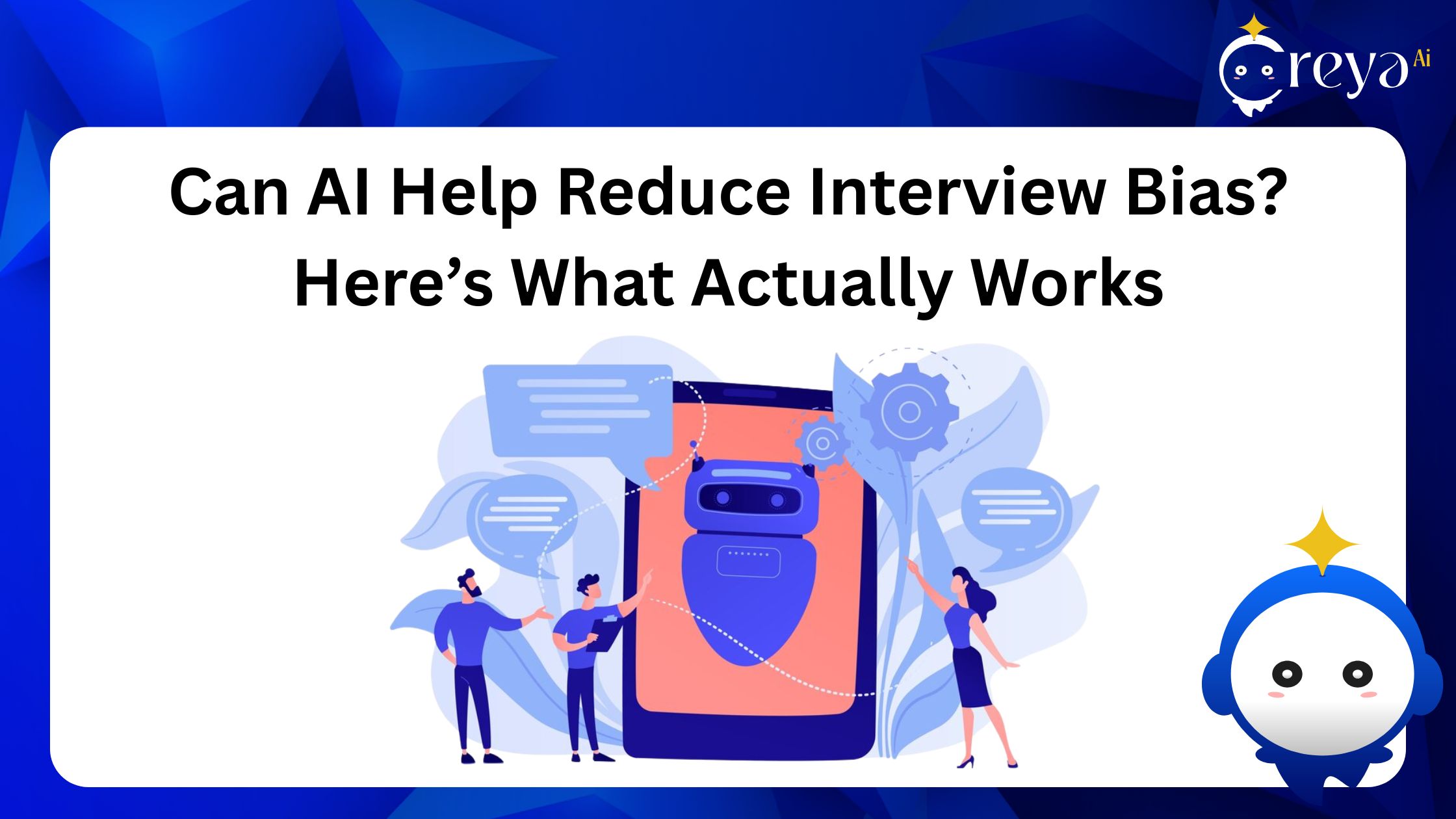
The changing face of modern technology has revolutionized the way companies search for new employees. Calendar invites, hard copy resumes, and interviews are no longer the in-things; they are being replaced with more sophisticated tools. One of the very vibrant current buzzwords is the AI interview software, promising quicker and fairer hiring. But do you think it is just an adored element within a wider populist agenda, or does AI naturally have a place in the future of hiring? Let us find out.
Evolution of Interview Technologies
From Traditional to Digital Hiring Processes
Not long ago, hiring was done by flipping through paper resumes, then engaging the candidates for face-to-face interviews. Phone screens were thrown into the mix, yet they also took quite some time. With jobs decreasing and competition increasing, this was not good enough. So from digital solutions employing online applications within days, virtual interviews rapidly became a new tradition for HR processes. These alternative hiring methods expedite the process and save money.
The Entry of AI in the Field of Recruitment
Very gradually, AI started to change the way recruitment is done. Chatbots were instituted to answer basic questions and resume sorting in absence of humans; AI screening aids would cut down the time to review tens of hundreds of resumes to just a few minutes. Furthermore, as AI tools kept improving, platforms like HireVue, Pymetrics, and Modern Hire caught on. They are used to offer scoring behind each and every response and actions taken by a candidate.
Current Market Snapshot
AI in recruitment is not a newcomer to the market. Many research analysts predict yearly growth in AI-driven hiring tools at over 10% in the next five years to come, as most large companies are heavily investing in AI platforms. The likes of HireVue and Pymetrics are household names in the HR industry. They claim that they can identify the best talent faster and fairly more than just by human effort alone.
Operating Techniques of AI Interview Software
Technologies Running AI Interviews
There are good tricks that AI interview platforms implement. With Natural Language Processing, things from what the candidates say are understood by the machine. This can mean heeding the mood of the statement, strategic words used, and also the sentiment it carries. Machine learning constantly improves the system’s accuracy with learning from past data. Some platforms have video analysis that scores facial expressions and emotions as well.
Differentiated AI Interview Platforms
Similarly, there are two types of interview modes. The first is asynchronous video interviews where interviewees record answers whenever convenient. The AI learns, thereafter, to evaluate its own recording. Live AI-assisted interviews enable candidates and AI chatbots or systems to interact in real-time.
Pre-screening chatbots quiz and score responses before scheduled time for human recruiters to evaluate.
Advantages for Employers
The use of AI interview tools will allow for prompt hiring, save the company hours—sometimes even days. It will mean that everyone is evaluated in one and the same manner—whereby human judgment brings in their unpredictability. Data from AI also helps managers make informed decisions while neutralizing biases of human judgment.
Advantages and Disadvantages of AI Interview Software:
Advantages of AI Interview Software for Candidates and Recruiters
Candidates can conduct interviews whenever and wherever. Recruiters are delivered objective evaluations so that the margin for subjective bias is decreased. This deep data analysis of responses points out emphatically whether the candidate is a fit for the position. AI brings new facets of what recruiters might want to see, among things they would never have caught in the first place.
Future Drawbacks and Ethics
There is a but: AI isn’t ideal. Algorithms could have biases if patched together wrongly from biased data in training. In a situation where personal information is collected without full disclosure of the terms, privacy becomes a minor issue. In cases where AI is overused-for example, without nuance-every candidate that doesn’t fit could get lost in the database somewhere. Some people in the industry are worried that AI could unconsciously reinforce stereotypes or, worse, discrimination instead of squelching it.
Opinions from the Experts and the Media
Experts in Human Resource (HR) fully argue that AI can be used as a supportive tool but never to replace human judgment. Ethical experts warn of biases and possible privacy abuses. There are also success stories when AI helped lift the hiring time, giving better candidates, but cautionary examples also warn of some pitfalls encountered if AI isn’t meticulously monitored.
Real-World Impact and Adoption Trends
Case Studies of Companies Using AI Interview Software
With the use of AI tools, Unilever’s recruitment time was reduced from months to a few weeks. According to Goldman Sachs, the firm has hired higher-quality candidates faster into the fold. The organizations mentioned above sifted through numerous applicants, using AI to weed out unqualified candidates quickly.
Adoption Barriers and Challenges
Nevertheless, a few companies are hesitant to undertake such an expenditure. Setting up the systems may be expensive, while training the AI is also costly. HR departments and traditionalists may resist any change, preferring the antiquated methods. Regulators’ rules governing data privacy and fairness have stubbornly impeded rapid adoption.
Future Outlook
Experts foresee the continued evolution of AI toward a situation where it can fully comprehend human emotion. The chances of integrating AI with other HR technologies, namely onboarding and performance management, seem high. The prospect is that AI might become rather commonplace in hiring, particularly for bigger organizations faced with juggling intern dozens of applications.
Is AI Interview Software a Fad or the Future?
Arguments for Long-Term Adoption
AI becomes more intelligent and fairer by the minute. Its capability of tackling heavy workloads renders it indispensable for large organizations. Early adopters have gained competitive edges, and others take cues from them. AI tools give scores that are consistent and free from bias in the selection process, operationally speeding up the identification of the best candidates.
Arguments Questioning Longevity
But with equal rapidity as AI advances, new tech comes along. The legal landscape moves on, somewhat complicating the scenario of AI usefulness. Many candidates prefer to talk to real human beings—not machines. There is the concern that AI may take away human intuition from the hiring process, which continues to play a very big part in hiring.
Expert Predictions and Market Analysis
Confirmably, HR tech thought leaders expect the continued existence of AI but not its dominance. In their words, AI is but a fragment of a sound hiring tactic. Industry forecasts agree with this, expecting steady growth and evolution rather than something totally away from the radar.
Actionable Tips for Employers and Candidates
For Employers
Balance AI tools with human insight—never rely solely on automation.
Be transparent about how AI evaluates candidates.
Regularly review AI algorithms to avoid bias and improve fairness.
For Candidates
Prepare for AI-driven interviews just as you would for traditional ones.
Read privacy policies to know what data is collected.
Be your authentic self—clear, honest responses work best.
Conclusion
AI interview software marks a major shift in how we find new talent. It offers clear benefits: faster processes, objective scoring, and better candidate pools. Still, it comes with challenges like fairness and privacy concerns. Whether it becomes a permanent part of recruiting or a passing trend depends on how companies handle these issues. The smart move: using AI wisely, as a tool to support human judgment—not replace it. When approached right, AI can help shape the future of hiring in a way that benefits everyone.
Share this post